Español
 русский
 대한민국
대한민국




Introduction of GR23 Titanium Wire Titanium Weld Wire:
GR23 titanium wire, also known as Titanium Grade 23, is a specific grade of titanium alloy primarily composed of titanium with 6% aluminum and 4% vanadium (Ti-6Al-4V ELI). Here's an introduction to GR23 titanium wire:
Composition and Properties:
Composition:
Titanium: Approximately 90%.
Aluminum: Approximately 6%.
Vanadium: Approximately 4%.
GR23 titanium wire is classified as an ELI (Extra Low Interstitial) grade, which means it has lower interstitial elements (such as oxygen, nitrogen, carbon) compared to standard Ti-6Al-4V alloy. This enhances its ductility and fracture toughness, making it suitable for applications where biocompatibility, corrosion resistance, and mechanical properties are critical.
Properties:
Biocompatibility: GR23 titanium wire is widely used in medical applications, including surgical implants and dental components, due to its excellent biocompatibility and low potential for allergic reaction.
Corrosion Resistance: Like other titanium alloys, GR23 offers exceptional resistance to corrosion in various environments, including seawater and chemical solutions.
Mechanical Properties: It exhibits high strength-to-weight ratio, good fatigue resistance, and moderate ductility, suitable for structural applications where strength and toughness are required.
Weldability: GR23 titanium wire is weldable using common techniques such as TIG (GTAW) and MIG (GMAW), although proper procedures are necessary to maintain mechanical properties and corrosion resistance.
GR23 Titanium Wire is the higher purity version of Ti 6Al-4V. It can be made into coils, strands, wires or flat wires and is the top choice for any sort of situation where a combination of high strength, light weight, good corrosion resistance and high toughness are required. It has a superior damage tolerance to other alloys.
Features of GR23 Titanium Wire:

GR23 titanium wire, also known as Titanium Grade 23 or Ti-6Al-4V ELI (Extra Low Interstitial), offers several distinctive features that make it suitable for various high-performance applications, particularly in industries requiring biocompatibility and corrosion resistance. Here are the key features of GR23 titanium wire:
Biocompatibility: GR23 titanium wire is widely recognized for its excellent biocompatibility, which makes it highly suitable for medical and dental applications. It is often used in surgical implants, such as bone plates, screws, and dental prosthetics, where it interacts well with human tissues and fluids without causing adverse reactions.
Corrosion Resistance: Like other titanium alloys, GR23 exhibits exceptional corrosion resistance, particularly in environments such as seawater and chemical solutions. This property makes it ideal for marine applications, where components need to withstand harsh conditions without deteriorating over time.
Strength and Lightweight: GR23 titanium wire maintains a high strength-to-weight ratio, which is a hallmark of titanium alloys. This combination of strength and lightweight properties makes it advantageous in aerospace applications, where reducing weight while maintaining structural integrity is critical for fuel efficiency and performance.
Low Density: Titanium is known for its low density compared to steel and other metals, contributing to its lightweight nature. This characteristic is beneficial in applications where weight reduction is essential, such as aerospace and automotive industries.
High Temperature Performance: GR23 titanium wire retains its mechanical properties at elevated temperatures, making it suitable for applications where thermal stability is required. This property is particularly important in aerospace and industrial sectors.
Weldability: GR23 titanium wire can be welded using common techniques like TIG (GTAW) and MIG (GMAW), although precautions must be taken to ensure proper weld quality and to maintain the alloy's corrosion resistance and mechanical properties.
Fatigue Resistance: Titanium alloys, including GR23, exhibit excellent fatigue resistance, which is crucial in applications where components are subjected to cyclic loading or stress over extended periods.
Non-magnetic: Titanium is non-magnetic, which is advantageous in applications where magnetic interference must be minimized or avoided, such as in medical imaging devices and sensitive electronic equipment.
Different Product Shapes:
Titanium coil wire, titanium spool wire, and titanium straight wire refer to different forms of titanium wire based on their packaging and configuration:
Titanium Coil Wire: This type of titanium wire is wound into coils, similar to how spring coils are wound. It is convenient for applications where continuous or long lengths of wire are needed without tangling. Coil wire allows for easy dispensing and handling in manufacturing processes.
Titanium Spool Wire: Titanium spool wire is wound onto a spool or reel, which provides a controlled and organized way to store and dispense the wire. Spooled wire is typically used in automated or semi-automated processes where precise lengths of wire are required without tangling or kinking.
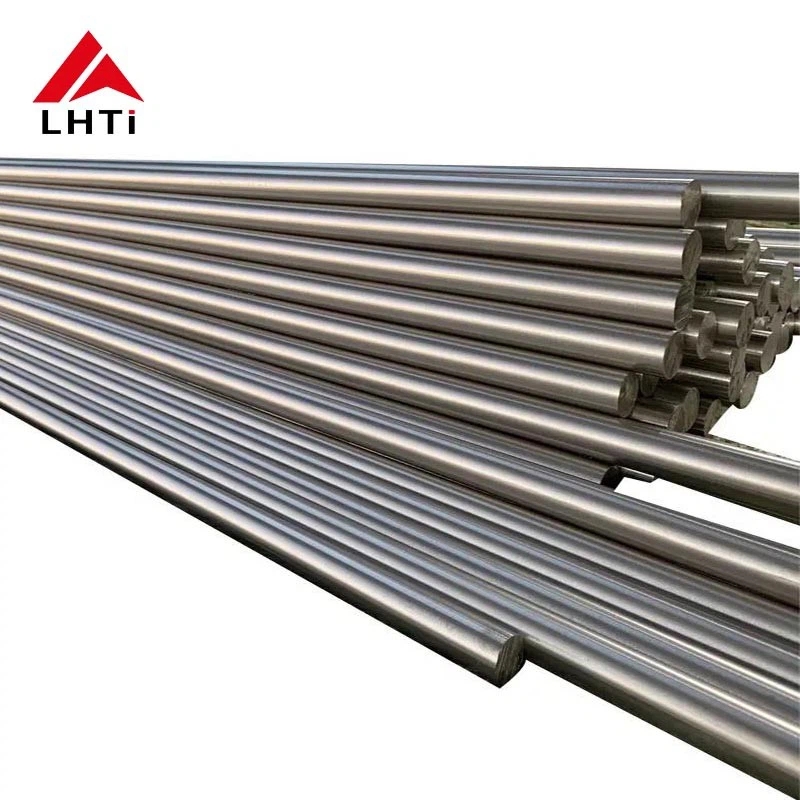
Titanium Straight Wire: Titanium straight wire is simply titanium wire that is supplied in straight lengths rather than wound into coils or spools. This form of titanium wire is used in applications where straight sections of wire are needed, such as manual welding or where specific lengths are required.
Applications:
Coil and Spool Wire: These forms are commonly used in automated welding systems, CNC machining, and automated manufacturing processes where continuous supply and feed of wire is necessary.
Straight Wire: Used in manual welding applications, fabrication, jewelry making, and wherever precise lengths of straight titanium wire are required.
Characteristics:
Titanium wire in all forms retains the characteristic properties of titanium, including its high strength-to-weight ratio, excellent corrosion resistance, and biocompatibility.
These forms of titanium wire are processed to meet various industry standards for purity, mechanical properties, and dimensional tolerances.