
 Español
 русский
 대한민국
대한민국




Grade 2 Titanium Wire
Material: Gr2
Unit Price: $25usd/kg-$60usd/kg
Shape: Straight, Spool, Coil
Diameter: 0.1-7.0mm
Surface: Bright
MOQ:10kgs
Factory Area:3000 ㎡
Company staff:48
Foreign trade team service staff:20
China's professional titanium wire manufacturer
Introduction of Titanium Wire:
Titanium wire has low density but high strength-to-weight ratio. In addition, it is non-toxic, non-magnetic and corrosion resistant. All these unique properties make titanium wire widely used in titanium woven and knitted mesh, electroplating, titanium fastener forming, welding, medical equipment manufacturing, spectacle frames, jewelry design and many other key industries.
Generally, users pay more attention to the chemical elements or impurities of titanium welding wire. For other applications, customer concerns will include surface condition, tolerance precision, tempering (hardness), continuous coil weight/dimensions, tensile strength/yield strength, etc. Our engineers will find you the most suitable solution for your specific job here.
Product Detailed Information:
Product name | Titanium Wire |
Grade | Gr1, Gr2, Gr3, Gr4, Gr5, Gr7, Gr9, Gr12, Gr23, Ti-15V-3Al-3Cr-3Sn (Ti-15333), Nitinol (Ni-Ti) |
Size | 0.1-7.0mm |
Shape | Straight, Spool, Coil |
Surface | Polishing, Pickling |
Standard | ASTM B863 (for general industry) AWS A5.16 (for welding) ASTM F67, F136 (for medical) Customized specification |
Certificates | EN 10204 3.1 Third parts inspection - SGS, TUV, BV etc. |
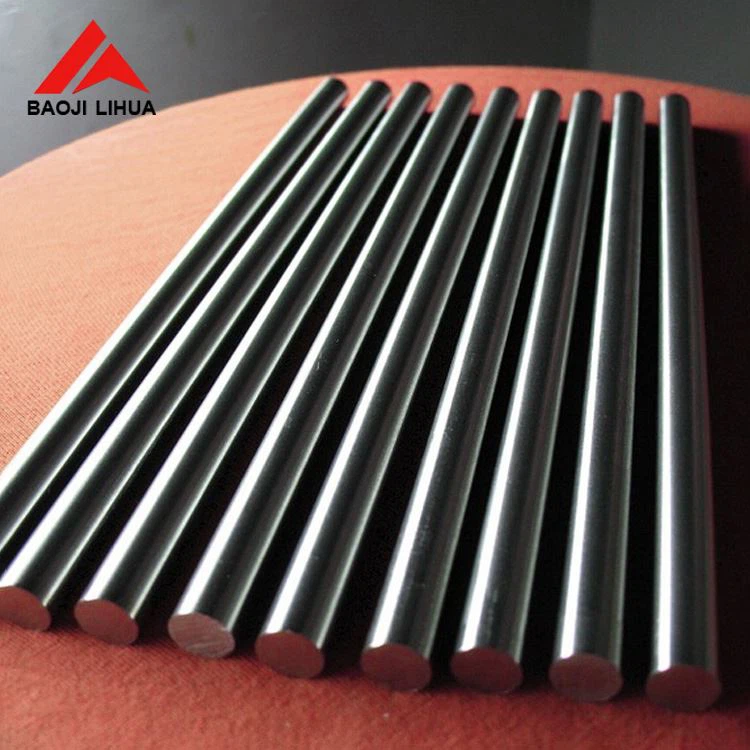
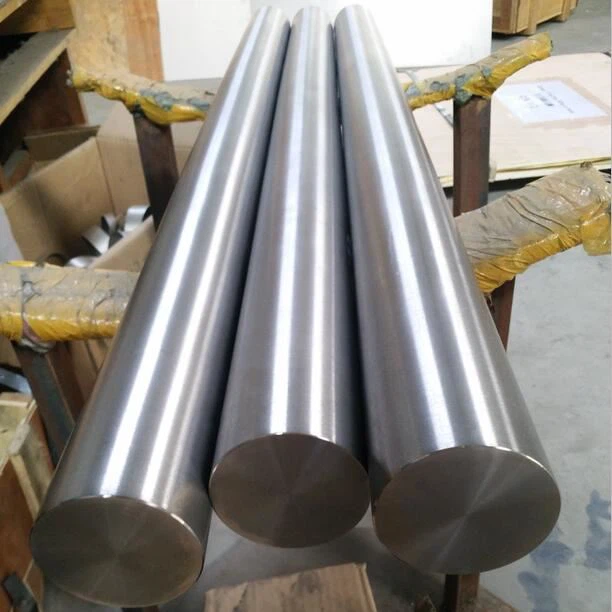
Detailed Images:


Packaging and shipping:
1. Straight titanium wire, we usually use plastic boxes for inside packing, each box is about 5kgs. Also can customize the packaging according to customer requirements. Outside are non-fumigated plywood cases conforming to export shipping standards
2. Coil titanium wire and spooled titanium wire, each coil or spool is individually packed with plastic foil film, and all gaps are filled with sponge. Outside are non-fumigated plywood cases conforming to export shipping standards


Composition and Properties:
Chemical Composition: Grade 2 titanium contains primarily titanium (at least 99.2% pure), with small amounts of oxygen, nitrogen, carbon, hydrogen, and iron. It is the most common form of commercially pure titanium.
Mechanical Properties: Grade 2 titanium exhibits excellent ductility and cold formability. It has a tensile strength ranging from 350 MPa to 550 MPa (50,000 to 80,000 psi) and a yield strength of about 275 MPa (40,000 psi). Its elongation at break is typically around 20%.
Corrosion Resistance: Like all titanium grades, Grade 2 titanium wire offers superb resistance to corrosion, particularly in environments like seawater and chloride solutions. This makes it suitable for marine and chemical processing applications.
Physical Properties: Grade 2 titanium has a density of approximately 4.51 g/cm³, which is about 60% that of steel, contributing to its lightweight nature.
Applications of Grade 2 Titanium Wire:
Medical Applications: Grade 2 titanium wire is commonly used in medical devices and implants, such as surgical instruments, orthopedic rods and pins, and dental appliances. Its biocompatibility and corrosion resistance are critical in these applications.
Aerospace: It finds use in aircraft components where its lightweight properties and resistance to high temperatures and corrosion are beneficial.
Chemical Processing: Grade 2 titanium wire is used in chemical processing equipment, including tanks, heat exchangers, and piping systems, due to its resistance to corrosive chemicals.
Marine: It is utilized in marine applications such as boat fittings, propeller shafts, and seawater desalination equipment, where resistance to seawater corrosion is essential.
Sporting Goods: Titanium wire is also employed in the manufacturing of sporting goods such as golf clubs and bicycles due to its lightweight and durable properties.
Advantages of Grade 2 Titanium Wire:
Biocompatibility: Suitable for medical implants and devices due to its biocompatibility with human tissue.
Corrosion Resistance: Excellent resistance to corrosion in various aggressive environments.
Lightweight: Significantly lighter than steel, contributing to weight savings in applications.
High Strength: Adequate strength for many engineering applications, especially when considering its low density.
Production Process:
1. Raw Material Preparation and Selection
Titanium Ingot Selection: The first step in producing Grade 2 titanium wire is selecting suitable titanium ingots. These ingots are typically refined through the chloride process to ensure high purity (at least 99.2% pure) and low impurity content, meeting ASTM B348 standards.
2. Melting and Casting
Melting: Selected titanium ingots are melted into liquid titanium metal. This process usually occurs under inert atmosphere to prevent oxidation. Alloying elements such as aluminum or iron may be added during melting to adjust the performance characteristics of the titanium alloy.
Casting: The melted titanium metal can be cast into various shapes, typically as plates or bars, preparing them for further processing into titanium wire.
3. Heat Treatment
Heat Treatment: For certain applications, especially to enhance mechanical properties and corrosion resistance, heat treatment is performed. This involves heating to specific temperatures and controlled cooling in an environment tailored to the desired material properties.
4. Hot Rolling and Cold Drawing
Hot Rolling: Cast titanium plates or bars undergo hot rolling using mechanical equipment to reduce their cross-sectional dimensions and adjust their shape.
Cold Drawing: Following hot rolling, titanium billets typically undergo cold drawing to further reduce their diameter and improve surface finish. Cold drawing involves pulling the titanium through a series of dies to achieve the desired diameter while enhancing strength and ductility.
5. Surface Treatment and Inspection
Surface Treatment: Cold-drawn titanium wire may undergo surface treatments such as pickling or electrochemical polishing to ensure surface cleanliness and final product appearance.
Quality Inspection: Rigorous quality control and inspection are conducted at each stage of production. This includes chemical composition analysis, mechanical property testing (such as tensile strength, yield strength, and elongation), surface quality checks, and dimensional accuracy.
6. Final Processing and Packaging
Final Processing: Depending on final product requirements, titanium wire may undergo cutting, coiling, or other shaping processes.
Packaging: After all processing and inspection stages are completed, titanium wire is packaged in a manner suitable for transportation and storage, typically using moisture-resistant packaging to protect against environmental damage.
Previous
Grade 5 Titanium WireNext
Titanium Wire 2mmYou Might Also Like
Send Inquiry